Showing posts with label Confucius. Show all posts

Wednesday, May 26, 2010

Confucius and Communication

కన్ఫ్యూషియస్

తన ఊళ్లో ఉంటే
మామూలుగా కనిపిస్తాడు. వినయంగా ఉంటాడు. మాటలు రావేమో అనిపించేట్టు ఉంటాడు.
ఇక రాజకుమారుని పూర్వీకుల మందిరాల్లో నయితే
ప్రతి విషయం గురించి క్షుణ్ణంగా మాట్లాడతాడు, కానీ ఆచితూచి మాట్లాడతాడు.
సభలో వేచి ఉన్నప్పుడు,తక్కువ స్థాయి అధికారులతోనయితే,
చప్పగా, సూటిగా మాట్లాడతాడు.

ప్రభువు సమక్షంలోనయితే,
అతని ప్రవర్తనలో గౌరవంతో బాటు ఒక అసౌకర్యబావం కనబడుతుంది.

అతిథుల మర్యాదకని యువరాజు పిలిచినప్పుడు,
అతని ముఖంతీరే మారుతుంది. కాళ్లు సులభంగా ముందుకు కదలవు.
తనతోబాటున్న ఇతర అధికారుల మీద ఆధారుడుతున్నట్టు వాలిపోతుంటాడు.
అవసరం కొద్దీ చేతులు కదిలిస్తుంటాడు. దుస్తులను సర్దుతూ ఉంటాడు.
పక్షిలాగ చేతులు ముందుక చాచి పరుగులు పెడతాడు.
అతిథి వెళ్లి పోయిన తర్వాత ఇక మళ్లీ రాడులే అంటాడు

రాజభవనంలోకి ప్రవేశిస్తుంటే,
వంగి నడుస్తాడు. ఆ ద్వారంలో తను పట్టడేమో అన్నట్టు.
నిలబడవలసి వస్తే మధ్యదారిలో మాత్రం ఉండడు.
గడపలను తొక్కకుండా దాటుతుంటాడు.

అంగణంలో నడుస్తుంటే,
అతని తీరు మారుతుంది. కాళ్లు వంగుతాయి.
శ్వాస అందదేమోనన్నట్టు తగ్గి మాటలాడతాడు.

సభలోకి ప్రవేశించేటప్పుడు,
దుస్తుల అంచులు రెండు చేతులా ఎత్తి పట్టుకుని మెట్లెక్కుతాడు.
ముందుకు వంగి, ఊపిరి తీయడం భయమేమోనన్నట్టు, బిగబట్టుకుని ఉంటాడు.

సభలోంచి బయటకు వస్తుంటే,
ఒక్కొక్క మెట్టుకూ సడలింపు కనబడుతుంది.
సంతృప్తి కనబడుతుంది.

చివరి మెట్టు దిగినాక,
చేతులాడిస్తూ ఇంటివేపు వేగంగా వెడతాడు.
అయినా మనిషి ముఖంలో ఏదో అసౌకర్యం కనబడుతుంది.

రాజదండం తన చేతిలో ఉంటే,
బరువు మోయలేకపోతున్నట్టు వంగిపోతుంటాడు.
నమస్కరించేప్పుడు కూడా దండాన్ని మరీ ఎత్తుకు ఎత్తడు.
మరీ కిందకూ దించడు.
అతని తీరులో అనుమానం కనబడుతుంది.
నడక బరువుగా నేలకు కట్టేసినట్టు సాగుతుంది.

బహుమతులు అందుకునేప్పుడు,
ముఖంలో భావాలుండవు.

తనవారి మధ్యలో మాత్రం,
ఎంతో ఆనందంగా కనబడతాడు.
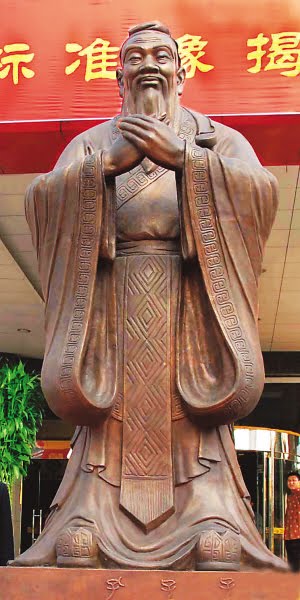
Confucius, in his village, looked simple and sincere, and as if he were not able to speak.


When he was in the prince's ancestral temple, or in the court, he spoke minutely on every point, but cautiously.

When he was waiting at court, in speaking with the great officers of the lower grade, he spoke freely, but in a straightforward manner; in speaking with those of the higher grade, he did so blandly, but precisely.

When the ruler was present, his manner displayed respectful uneasiness; it was grave, but self-possessed.

When the prince called him to employ him in the reception of a visitor, his countenance appeared to change, and his legs to move forward with difficulty.

He inclined himself to the other officers among whom he stood, moving his left or right arm, as their position required, but keeping the skirts of his robe before and behind evenly adjusted.

He hastened forward, with his arms like the wings of a bird.

When the guest had retired, he would report to the prince, "The visitor is not turning round any more."

When he entered the palace gate, he seemed to bend his body, as if it were not sufficient to admit him.

When he was standing, he did not occupy the middle of the gateway; when he passed in or out, he did not tread upon the threshold.

When he was passing the vacant place of the prince, his countenance appeared to change, and his legs to bend under him, and his words came as if he hardly had breath to utter them.

He ascended the reception hall, holding up his robe with both his hands, and his body bent; holding in his breath also, as if he dared not breathe.

When he came out from the audience, as soon as he had descended one step, he began to relax his countenance, and had a satisfied look.

When he had got the bottom of the steps, he advanced rapidly to his place, with his arms like wings, and on occupying it, his manner still showed respectful uneasiness.

When he was carrying the scepter of his ruler, he seemed to bend his body, as if he were not able to bear its weight. He did not hold it higher than the position of the hands in making a bow, or lower than their position in giving anything to another. His countenance seemed to change, and look apprehensive, and he dragged his feet along as if they were held by something to the ground.

In presenting the presents with which he was charged, he wore a placid appearance.

At his private audience, he looked highly pleased.

Do you get the message?
%%%%%%%

Monday, May 4, 2009

Confucius for you


Confucian Analects

The Master said, "At fifteen, I had my mind bent on learning.
"At thirty, I stood firm.
"At forty, I had no doubts.
"At fifty, I knew the decrees of Heaven.
"At sixty, my ear was an obedient organ for the reception of truth.
"At seventy, I could follow what my heart desired, without transgressing what was right."

గురువన్నాడు గదా,
పదిహేనేళ్ల వయసులో నా మనసంతా నేర్చుకోవాలన్న ధ్యాస.
ముప్ఫయి ఏళ్లకు నేను గట్టిగా నిలువ గలిగాను.
నలభయ్యేళ్లకు నాకు అనుమానాలే లేవు.
యాభయ్యేళ్లకు నాకు స్వర్గం సంగతులు తెలిశాయి.
అరవయ్యేళ్లకు నాచెవి సత్యాన్నందుకునేందుకు చక్కని అవయవమయింది.
డెబ్భయ్యేళ్లకు నేను నా మనసు మార్గంలో నడవగలిగాను. అదీ, సరయిన దారినుంచి తప్పకుండా.


Mang I asked what filial piety was. The Master said, "It is not being disobedient."
Soon after, as Fan Ch'ih was driving him, the Master told him, saying, "Mang-sun asked me what filial piety was, and I answered him,- 'not being disobedient.'"

Fan Ch'ih said, "What did you mean?" The Master replied, "That parents, when alive, be served according to propriety; that, when dead, they should be buried according to propriety; and that they should be sacrificed to according to propriety."

Mang Wu asked what filial piety was. The Master said, "Parents are anxious lest their children should be sick."

Tsze-yu asked what filial piety was. The Master said, "The filial piety nowadays means the support of one's parents. But dogs and horses likewise are able to do something in the way of support;-without reverence, what is there to distinguish the one support given from the other?"

Tsze-hsia asked what filial piety was. The Master said, "The difficulty is with the countenance. If, when their elders have any troublesome affairs, the young take the toil of them, and if, when the young have wine and food, they set them before their elders, is THIS to be considered filial piety?"


వంశ మర్యాదంటే ఏమిటని మాంగ్ వన్ అడిగాడు. అవిధేయత లేకుండడమే అన్నాడు గురువు.

వెంటనే, ఫాన్ చీ తో వెళుతూ, వంశ మర్యాదంటే ఏమిటని మాంగ్ సన్ అడిగాడూ, నేనేమో అవిధేయత లేకుండడమే అన్నానూ అని గురువన్నాడు,
అంటే ఏమర్థం అన్నాడు ఫాన్ చీ. అంటే తల్లిదండ్రులు బతికున్నంతకాలం పద్ధతిగా వారికి సేవ చేయాలి. వారు మరణించిన తర్వాత పద్ధతిగా అంత్యక్రియలు చేయాలి. ఆ తర్వాత వారికి పద్ధతి ప్రకారం శ్రాద్ధాలు చేయాలి. అన్నాడు గురువు.
వంశ మర్యాదంటే ఏమిటని మాంగ్ వూ అడిగాడు. గురువన్నాడూ, పిల్లలెక్కడ జబ్బు పడతారోనని తల్లిదండ్రుల ఆదుర్దా అని.

వంశ మర్యాదంటే ఏమిటని ట్సే యూ అడిగాడు. ఈ కాలంలో వంశమర్యాదంటే తల్లిదండ్రుల సాయం అనాలి. కానీ కుక్కలూ, గుఱ్ఱాలుకూడా ఏ సంబంధమూ లేకుండానే సాయంగా ఏదో చేయగలిగి ఉంటాయి. ఈ రెండు రకాల సాయాలకూ తేడా చెప్పడానికి ఏముంది అన్నాడు గురువు.
ఇక ట్సే సియా వంశమర్యాదంటే ఏమిటని అడిగాడు. కష్టమంతా చూడడంలో ఉందన్నాడు గురువు. పెద్దవాళ్లెవరయినా కష్టాల్లో పడితే పిల్లలు వాళ్ల బాధలను పంచుకుంటారు. ఇక పిల్లలకు తిండీ తాగుడూ దొరికితే దాన్ని పెద్దల ముందు పెడతారు.వంశమర్యాదని దీన్నే అనుకోవాలా అని కూడా అడిగాడాయన.


The Master said, "I have talked with Hui for a whole day, and he has not made any objection to anything I said;-as if he were stupid. He has retired, and I have examined his conduct when away from me, and found him able to illustrate my teachings. Hui!-He is not stupid."
నేను హుయీతో ఒకరోజంతా మాట్లాడాను. నేనన్న ఒక్కమాటకూ అతను అభ్యంతరం చెప్పలేదు. అతను తెలివిగలవాడు కాదనిపించింది. అతను వెళ్లిపోయాడు. అతను నాముందు లేనప్పుడతని ప్రవర్తనను గమనించాను. నా బోధనలన్నిటినీ బాగా చెపుకున్నాడు. హుయీ తెలివిగలవాడు అన్నాడు గురువు.


The Master said, "See what a man does.
"Mark his motives.
"Examine in what things he rests.
"How can a man conceal his character? How can a man conceal his character?"
ఒక మనిషి ఏంచేస్తాడో గమనించు. అన్నాడు గురువు.
అతని ఉద్దఏసాలేమిటో గమనించు.
అతను ఏ విషయాలలో మునుగుతాడో గమనించు.
ఏ మనిషయినా తన వ్యక్తిత్వాన్ని ఎలా దాచగలడు ఏ మనిషయినా తన వ్యక్తిత్వాన్ని ఎలా దాచగలడు


The Master said, "If a man keeps cherishing his old knowledge, so as continually to be acquiring new, he may be a teacher of others."
ఒక మనిషి తన పాత తెలివిని గుర్తుంచుకుంటూ క్రమంగా కొత్తవిషయాలను తెలుసుకుంటుంటే, మిగతావారికి అతను గురువు అయ్యుంటాడు అన్నాడు గురువు.
The Master said, "The accomplished scholar is not a utensil."
యోగ్యుడయిన విద్వాంసుడంటే ఓ గిన్నె లాంటిది కాదు అన్నాడు గురువు.